
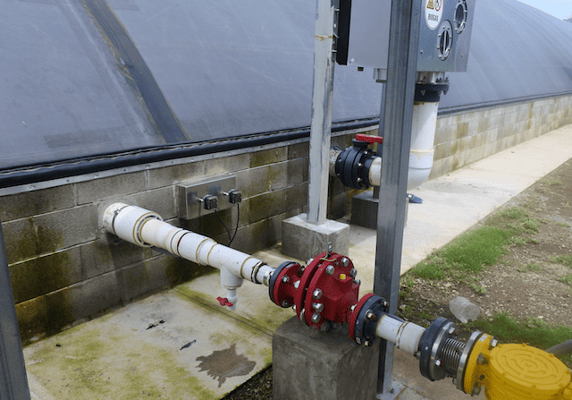
flame arresters
High-Quality Equipment for Reliable Biogas Operation

At Aqualimpia Engineering, quality is a fundamental principle of every biogas project we develop. Our equipment is specifically designed for the demanding conditions of industrial digesters, where moisture, H₂S, and corrosive environments require durable and carefully selected materials.
-
Stainless steel (AISI 304 / 316 / 316L) for high-corrosion and high-H₂S applications
-
Carbon steel with professional anti-corrosion protection for cost-efficient and structurally robust solutions
All equipment is manufactured according to strict European quality standards and selected based on real process conditions — not generic specifications.
Because we design and build digesters ourselves, we understand exactly which materials, safety margins, and technical characteristics are required to ensure long-term reliability.
Our philosophy is simple:
Durability, safety, and performance always come before short-term savings
Why Flame Arresters Are Essential
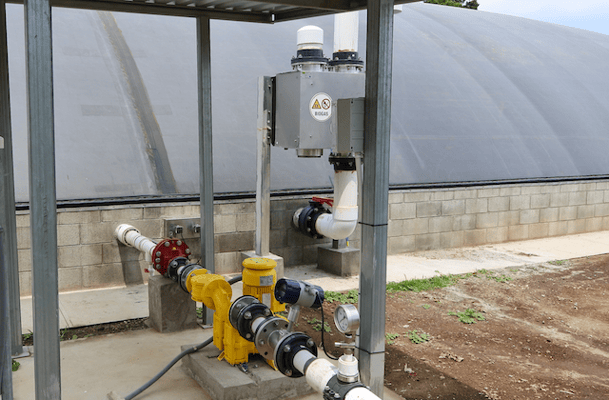
Flame arresters are a critical safety component in any biodigester installation handling biogas. Since biogas typically contains methane (CH₄), which is highly flammable, the risk of flame propagation within the gas piping system must be carefully controlled.
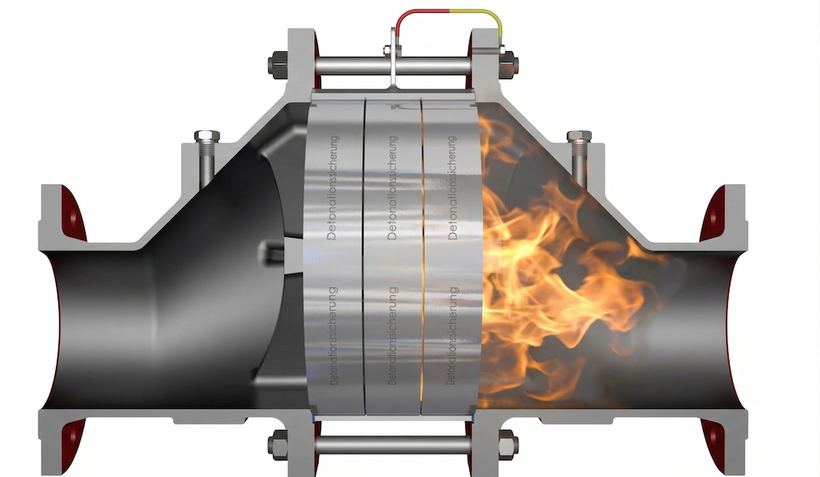
A flame arrester is designed to stop a flame front from traveling back into the digester, gas holder, or upstream piping in the event of ignition. It achieves this by dissipating heat through specially designed metal elements (usually stainless steel), which cool the flame below the ignition temperature of the gas mixture.
-
Protection of the Digester Structure
A flame entering the digester could cause internal overpressure, structural damage, or even catastrophic failure of the tank or membrane roof. -
Explosion Prevention
In biogas systems, oxygen may be present in small concentrations during maintenance, start-up, or due to air ingress. This can create explosive gas mixtures. Flame arresters prevent flame transmission in such scenarios. -
Protection of Gas Holders and Membranes
Double membrane gas holders are particularly vulnerable to ignition. A properly installed flame arrester significantly reduces this risk. -
Compliance with Safety Standards
Industrial biogas plants must comply with international safety regulations (e.g., ATEX, EN ISO, DIN standards). Flame arresters are often mandatory components under these frameworks. -
Protection of Downstream Equipment
Combined heat and power (CHP) units, boilers, flares, and gas upgrading systems must be protected against flashback from ignition sources.
Types of Flame Arresters in Biogas Systems
-
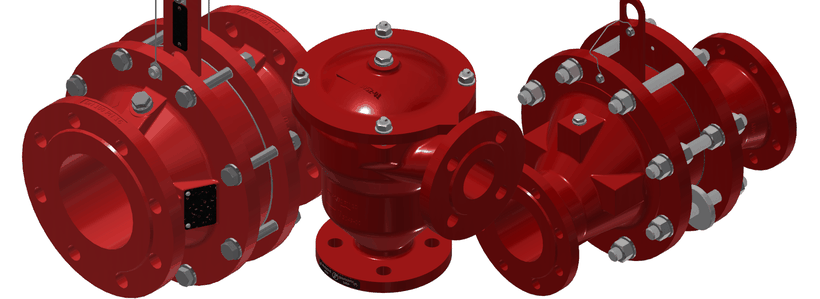
In-line flame arresters
-
End-of-line (deflagration) flame arresters
-
Detonation flame arresters
-
Flame arresters integrated with condensate pots or safety valves
The correct selection depends on:
-
Gas composition
-
Operating pressure
-
Pipe diameter
-
Explosion group classification
-
Installation position
Engineering Considerations
Proper installation is as important as proper selection. Flame arresters must be:
-
Installed according to manufacturer specifications
-
Regularly inspected and maintained
-
Protected from clogging (condensate, dust, sulfur deposits)
In biogas systems with high H₂S content, corrosion-resistant materials such as AISI 316L stainless steel are recommended.
Flame arresters are not optional accessories — they are essential safety barriers in biogas installations. A well-engineered biodigester system always integrates certified flame arresters as part of its gas safety concept, ensuring operational reliability, regulatory compliance, and protection of both personnel and infrastructure.
Latent Risks of Not Installing Flame Arresters or Using Low-Quality
Equipment in Biogas Systems
Biogas plants operate with combustible gas mixtures containing methane (CH₄), carbon dioxide (CO₂), hydrogen sulfide (H₂S), and potentially traces of oxygen. In such environments, the absence of certified flame arresters — or the installation of low-quality, non-certified equipment — represents a serious and often underestimated safety hazard.
1. Risk of Flashback and Flame Propagation
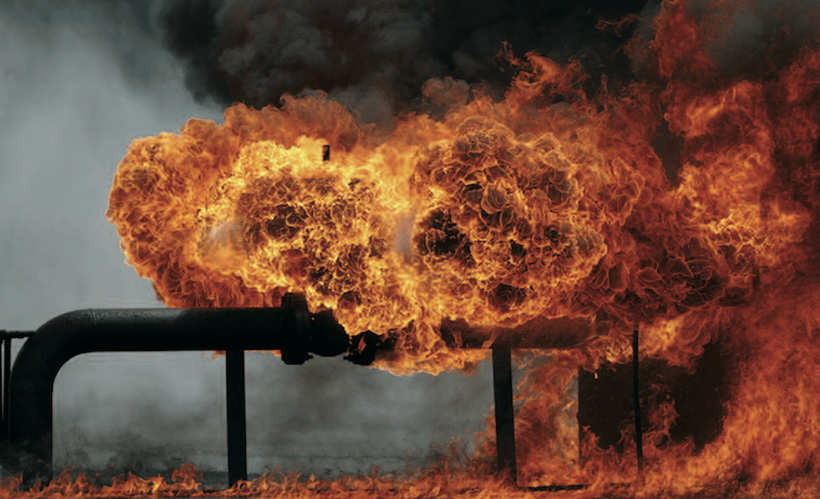
Without properly engineered flame arresters, any ignition at a flare, CHP unit, boiler, or gas upgrading system can result in flame propagation back through the piping network. A flashback reaching the digester or gas holder can lead to:
-
Internal explosion
-
Rapid pressure increase
-
Structural failure of tank walls or membrane roofs
-
Catastrophic plant damage
This risk is particularly high during start-up, shutdown, maintenance operations, or in cases of air ingress.
2. Explosion Hazards Due to Oxygen Ingress
Even small amounts of oxygen entering a biogas system can create explosive mixtures within the flammability range of methane. Without certified detonation or deflagration flame arresters, the system has no reliable barrier to stop flame transmission.
The consequences may include:
-
Secondary explosions
-
Complete destruction of gas storage systems
-
Severe injuries to personnel
-
Long-term plant shutdown
3. Structural and Financial Consequences
A biodigester is a large-volume structure operating under specific pressure conditions. An internal ignition event can:
-
Destroy membrane roofs
-
Damage agitators and internal equipment
-
Compromise concrete or steel tank integrity
-
Lead to costly reconstruction
The financial impact can easily exceed the original cost of properly specified safety equipment.
4. Corrosion and Failure of Low-Quality Equipment
Biogas contains hydrogen sulfide (H₂S), moisture, and other corrosive compounds. Low-quality or non-certified flame arresters may:
-
Corrode rapidly
-
Become clogged by sulfur deposits
-
Lose heat dissipation capacity
-
Fail during a flashback event
A failed flame arrester provides a false sense of security while offering no real protection.
5. Non-Compliance with Safety Regulations
Industrial biogas installations are subject to international safety standards such as ATEX, EN, DIN, and other explosion protection directives. The use of non-certified equipment may result in:
-
Regulatory violations
-
Insurance claim rejection
-
Legal liability
-
Criminal responsibility in case of accident
6. Reputation and Business Risk
Beyond technical damage, an explosion or fire incident can permanently damage the operator’s reputation, disrupt energy supply contracts, and jeopardize investor confidence.